
Practical AI for Public Health
AI training, workflow design, and responsible implementation support for teams that need real results, not hype.
Backyard-AI helps public health organizations, nonprofits, universities, coalitions, recovery organizations, and mission-driven teams use AI for evidence synthesis, health communication, workforce training, reporting, and workflow improvement with strong human oversight.
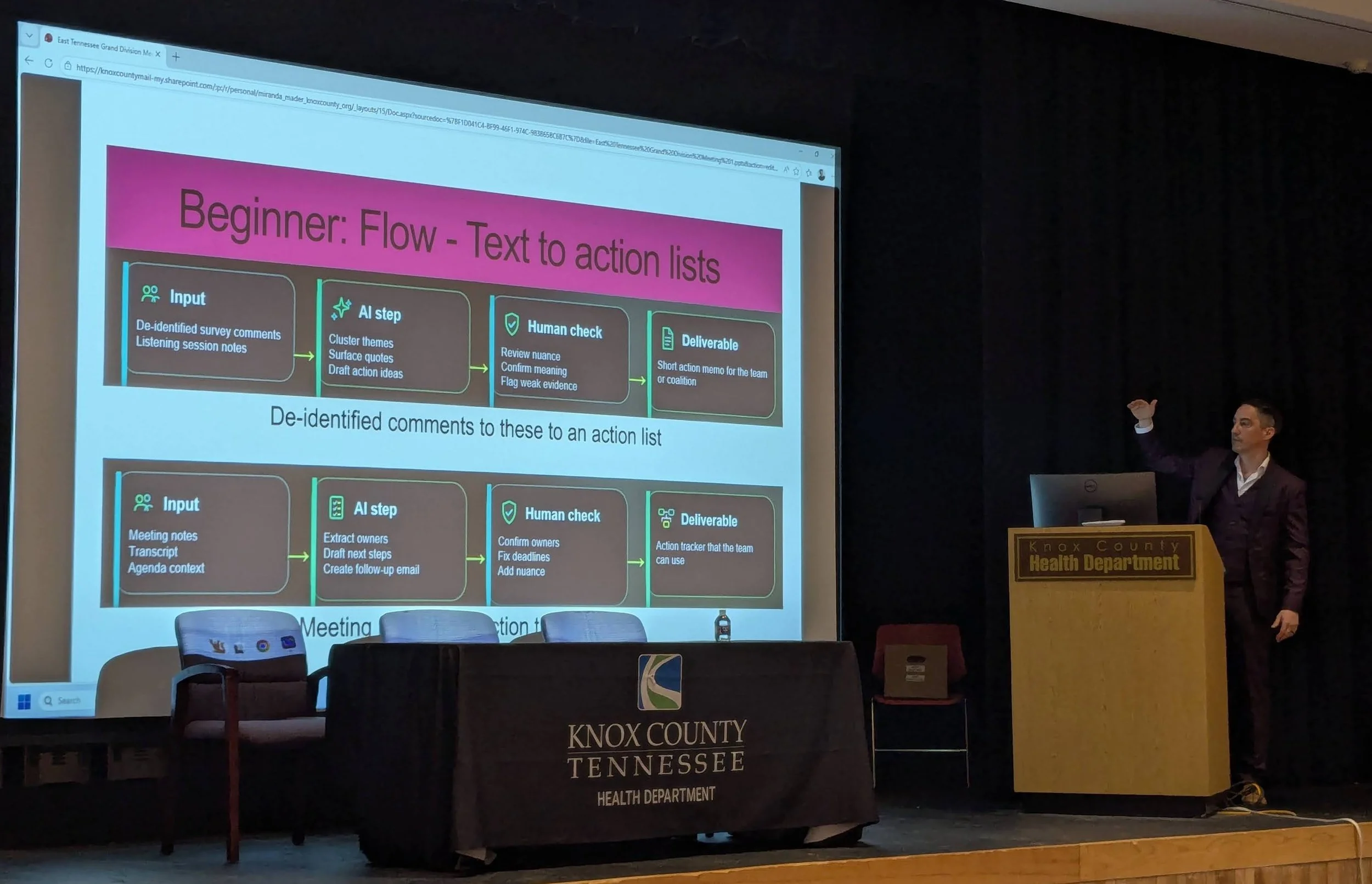
AI can save time, improve communication, and support better internal systems, but only when it is applied to the right workflow with the right guardrails. Backyard-AI helps teams choose practical use cases, train staff, design repeatable workflows, and build safer implementation plans.
Built for public health departments, nonprofits, universities, coalitions, recovery organizations, and other mission-driven teams.
Does your organization define success by meeting a mission instead of profit? You’re in the right place.
They need practical answers to questions like:
Which workflows are actually safe and useful for AI support?
What should staff be allowed to use AI for?
How do we keep human review, accuracy, and trust in the process?
How do we turn AI from a curiosity into a repeatable workflow?
How do we avoid using AI in places where it does not belong?
Backyard-AI helps teams answer those questions through training, workflow design, readiness assessment, and responsible implementation support.
What Backyard-AI helps teams do
AI Readiness and Use-Case Prioritization
Identify where AI can help, where it should not be used, and which workflow is most realistic to pilot first.
Workflow Sprints
Build one narrow, repeatable, human-reviewed AI workflow for reporting, communication, evidence synthesis, training, or knowledge access.
Controlled Knowledge Assistants or Chatbots
Plan and pilot controlled assistants or chatbots using approved source materials, defined scope, review steps, and evaluation criteria.
Practical AI Workshops
Train staff with public-health examples, clear boundaries, realistic prompts, and human-review expectations.
Responsible AI Starter Kits
Create basic guidance, risk tiers, disclosure language, and review expectations so staff can use AI more confidently and safely.
Locally Hosted AI tools and Agents
Design narrow AI tools that use approved materials, clear boundaries, and defined review steps. This can include internal knowledge assistants, resource-navigation pilots, training support tools, or workflow-specific assistants that help staff find and organize information without replacing human judgment.
What people are saying
Jesse AI - Chatbot — Ai4 Conference, Las Vegas
“I can’t wait to bring Nick to our organization to create our own chatbot“
— Nonprofit partner
“The AI chatbot has saved hours of staff time.”
— Colleague
“I didn’t know AI could be easy.”
— Client
Speaking and workshops
Nick Swope helps public health teams move from AI curiosity to practical implementation
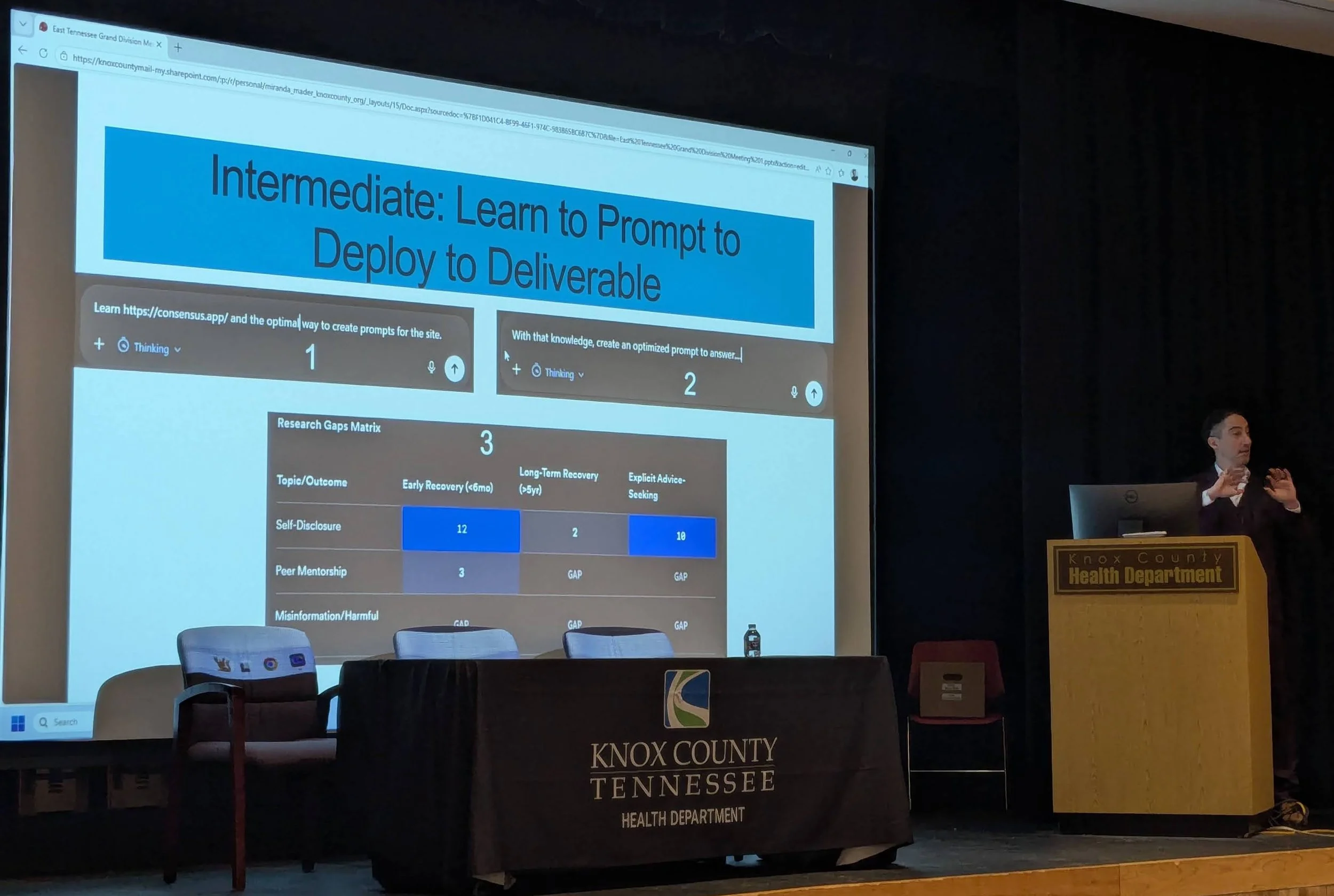
Bring Nick to your organization for a practical, hands-on session on how AI can support real public health work without the hype. Nick helps teams understand how AI can be used for evidence synthesis, communication, workforce training, workflow improvement, and responsible implementation.
Attendees leave with usable tools, realistic guardrails, and clear next steps they can apply immediately in their own work.
Let’s build something useful
Whether you need a workshop, a readiness sprint, a workflow sprint, responsible AI guidance, or a controlled knowledge-assistant pilot, Backyard-AI can help your team move from interest to implementation.